

President Marc Ravalomanana is a man
with a mission: to bring prosperity to his
people by building a thriving economy, and to
see Madagascar become a major player in
international trading.
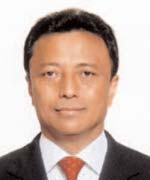 |
|
Marc Ravalomanana President |
|
The President hopes Madagascar’s future can
parallel his own rags-to-riches story. Born in a village
not far from the capital Antananarivo, he
began his working life selling home-made yogurt
from a bicycle. Today his dairy and oil products
business TIKO is the largest locally-owned company
on the island. Madagascar will also have to
fight against the odds to improve its fortunes
and alleviate the poverty of its people, but like
the President, it has been gifted with the
resources and potential to achieve its goals.
Ravalomanana had a rocky start to his presidency when his victory
in the elections of December 2001 was disputed by the outgoing
leader. The crisis lasted for six months until Ravalomanana was recognized
as legitimate leader by the U.S. and France. He received a
fresh mandate in elections in December 2002, and with the full support
of his people has achieved political and economic stability.
The figures are impressive – 2003 saw unprecedented GDP
growth of 9.6%, with 8% expected for 2004 and just 5% inflation.
The President has introduced strict measures to tighten fiscal management
and increase transparency and good governance. Together
with the gradual liberalization of the economy and political stability,
there is much to interest foreign investors. Areas of great potential
include agriculture, mining and tourism.
Private investment is seen as the driver for development and policy
has been focused on creating the right infrastructure to foster public
private partnerships, including upgrading transport, energy and
telecommunications, and reforming institutions. Tax has been
reduced to 0% and for the first time since independence from France
in 1960, land can now be owned by foreigners. “The engine of the
development of Madagascar is the private sector,” says the President.
With stability, good governance and transparency in place, the main
priorities are to improve the infrastructure and deliver education,
health and clean water for all. In November 2003, Ravalomanana set
out a roadmap for development, the Poverty Reduction Strategy
Paper, which received approval, without amendments, at the highest
international level from the World Bank and the IMF.
Great efforts have also been made to diversify the economy from
over-dependency on the export of vanilla, cloves and coffee by creating
other export industries such as textiles. At the same time the
economy has had to cope with the inflationary effect of rising world
oil prices, and the government has taken steps to stabilize the
Malagasy franc. Working with institutions such as the World Bank
and the African Development Bank, the government has also created
a bank to help finance the private sector in joint ventures, called IFC.
Within the regional framework,
Madagascar works with COMESA (Common
Market of Eastern and Southern Africa),
SADEC (South African Development
Community), and COI (Commission of the
Indian Ocean) to minimize transaction costs
and improve competitiveness. Foreign
Affairs Minister Marcel Ranjeva has been
instrumental in building strong links with
international partners such as NEPAD,
through which Madagascar is receiving
G8 support.
Decentralization of power is a key factor in
the government’s strategy to open up the
rural economy and infrastructure. The selection
process has already started to find the heads of the 22 regions, who will act as coordinators
between the mayors, local bodies
and associations, and central government.
This devolution of power is welcomed by the
Ambassador for the European Commission,
Pierre Protar. “The EU supports the opening
up of Madagascar, local development, and
the consolidation of the macroeconomic and
budgetary framework to improve public
finances,” he says.
The European Commission is financing
the 280-mile RN6 highway linking the capital
to Diego in the north. This is the biggest tender
in Africa and worth 19 million euros.
Transport infrastructure
Opening up the transport infrastructure will
transform domestic and international trade
and liberate the rural population. Within the
next four years, the aim is to have nearly
9,000 miles of highway connecting the main
arteries of the country: the port and airport.
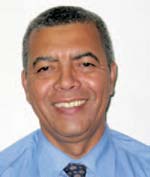 |
|
Pierrot Botozaza,
Port of Toamasina |
|
Toamasina is the largest port, handling
70% of international trade, and the target is
to double its productivity in the next two
years to handle five million tons of merchandise
a year. Management of the port is being
taken over by SPAT (Society of the
Autonomous Port of Toamasina). The transition
will take four years. “We want to transform
the port into an industrial and commercial
zone,” says deputy director, Pierrot
Botozaza. “The port must become a national
economic catalyst and a backbone for the
development of the country.”
Development of the rail network will be
co-ordinated with the ports to integrate
transport logistics. Currently, a railroad run by
private partner Madarail links the capital
Antananarivo with Toamasina, and the government
is finalizing the concession for a rail
link in the south. “We are looking for more
private investment for the main airport, to
open up the capital, and welcome more
freight traffic from overseas,” says Vice PM
and Minister of Transport, Zaza
Ramandimbiarison.
The state-operated Air Madagascar began
after independence in 1962. It now has 13
aircraft and made an operational profit of
around $10 million in 2003. Air Madagascar
is heavily involved in upgrading Tana airport,
putting in new counters and a new IT system. “We are hoping for increased foreign
investment and business set- ups to bring
more business travelers to Madagascar and encourage air travel
within the country.
Considering the state of
the roads, flying
remains a good option,” says Berend Bruns,
director general.
Meanwhile,
Madagascar is completely
reforming its
post, telecoms and
information and communications
technology. The post is becoming
more reliable, and Minister of
Telecommunications, Clermont Mahazaka
says work has already begun on an undersea
fiber optic cable to link Madagascar directly
to the African mainland. Fixed, cellphone and
telecenter operations will put people in touch
with the world and open up the possibility of
service industries in the ICT sector, such as
call centers.
Time to modernize
 |
 |
|
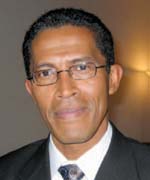
Left: Olivier S.
Andrianarison,
Minister of Trade and Industry Right: Berend Bruns, Air Madagascar |
||
Minister for Trade and Industry, Olivier
Andrianarison says Madagascar must modernize
to compete and its young population
will be of great benefit in developing the
services sector. “Madagascar must increase
capacity, and modernize agricultural and
industrial production,” he says.
This is certainly true of agriculture, where
expansion and diversification will help alleviate
widespread rural poverty. Although over
80% of the population make their living from agriculture (it accounts for a third of GDP and
70% of exports), only 10% of the land is currently
being exploited. Add to this the opportunities
for fishing and aquaculture of the extensive
coastline, and the scale of possible development
becomes clear. Tapping this potential is a key priority
of the Poverty Reduction Strategy, which
aims to grow the sector by 4% a year. “We are
surrounded by countries who have problems
with resources, for whom Madagascar could act
as a bread basket,” says Harison
Randriarimanana, Minister of Agriculture and
Fishing. Madagascar could become the rice
store for COMESA, he argues, and could supply
Arabic countries with the thousands of sheep
they currently import from Australia. Its vanilla is
the best in the world, and with proper investment,
such development can be successful, as
the shrimp industry has already proven. “Our
small farmers cannot do it alone,” cautions the minister. “We need investors to build a large
industrial plant with high productivity.”
The experience of the Food and Allied
Industries Ltd (FAIL) group shows this kind of
development can bring rewards. FAIL has been in Madagascar for
around 10 years. Its poultry arm, Avitech, produces 80,000 poussins
a week. It later created the society Panagora, to import and distribute
food throughout Madagascar, and now has four distribution centers.
Meanwhile, its service company FTL Madagascar offers logistics and
international transportation, and newly formed LFL Sarl provides animal
foodstuffs for the livestock industry. FAIL’s ambitious plans
include entering the tourism industry using expertise gained from running
hotels in Mauritius.
By far the largest agro-food company is TIKO, which has been in
operation for 25 years. Despite the political crisis of 2002, sales
bounced back by 60% in 2003 and were projected at 25% up in 2004.
This growth is in part due to the launching of four MAGROs –
Malagasy Wholesale Centers – to manage supply and distribution.
Another 20 will follow this year. Like FAIL, it takes its social responsibilities
seriously “Our social priority remains to keep prices down in
order to make our products accessible to a majority of Malagasy people,” says director general Nasolo Ranaivoson.
 |
|
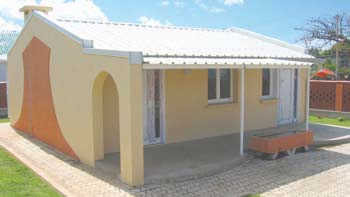
The first anti-cyclone house produced by SEIMad. www.seimad.mg |
|
Progress is already evident in the growing demand for housing,
particularly from the middle classes, working in the private or public
sector, who would like to own their own home. The Bank of Africa has loaned 5 billion Malagasy francs ($502,500) to state construction
organisation SEIMad, which currently has five large building sites on
the go. SEIMad has also developed an anti-cyclone house with a steel
frame able to resist winds of up to 250 kilometers an hour. It now
needs to promote the house and find funding, possibly from the government,
to subsidize construction.
SEIMad has already secured international funding. The Bank of
Montreal has agreed to $15 million in principle, and director general
Harimamy Rajaonarison hopes to get another $15 million from the
African Development Bank. “With this, we could build 900 houses,
which is modest compared to the demand,” he says. SEIMad also
acquires land on behalf of the state for tourist development, and
identifies hotel groups who would like to invest in Madagascar.
Tourism
2003 saw the construction of 540 extra hotel rooms and the creation
of 1100 jobs. By 2007, Minister of Culture and Tourism Jean Jacques
Rabenirina aims to be attracting some 500,000 visitors a year. “Our
aim is to promote our cultural diversity and prioritize tourism development,
to safeguard our cultural heritage, encourage the arts at
national and international level, and make tourism a lever for sustainable
development which respects the natural, social, economic and
cultural environment,” he says.
With 3,100 miles of sandy beaches, vast biodiversity and strong
culture and traditions, the world’s fourth largest island has much to
offer visitors from all over the world. The main destinations are at
Nosy Be, Tuléar and the island of Sainte Marie. The government has
produced a master plan targeting higher-end tourism and new direct
links, like Bangkok-Antananarivo and Milan-Nosy Be should help bring
more visitors.
The ministry has created the Tourist Real Estate Reserve to identify
areas for investment, while Guide (a one-stop shop for investments
and business development) is smoothing the way, cutting bureaucracy
and red tape. Current projects include a possible five hotels from the
Accor group, the 3,000-room Eden Park complex near Morondava with
French, Mauritian and German interests, and a hotel on the islet Iranja
by South African company Legasy Bullington. The independent three
star Hotel du Louvre in Antananarivo has 60 rooms and is strategically
located for both tourists and business visitors, near the banks and ministries.
It has first-class facilities, including a Business Center with
Internet, fax, and wi-fi.
Energy and mining
Half the country’s energy needs are supplied by thermal plants, and
half by hydroelectric power. Over the next 10 years, the government
aims to increase hydroelectric power to 75% – more cost-effective
long term. “Energy is a tool for development. If one wants to attract
industry to Madagascar (in tourism and so on), if one wants each village
to have water, electricity, not to use wood for cooking and to
decrease deforestation in Madagascar, one must supply energy everywhere in the country,” says Jacquis H.
Rabarison, Minister of Energy and Mines.
 |
|
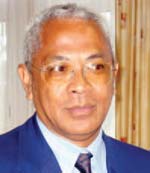
Jacquis H Rabarison,
Minister of Energy
and Mines |
|
The oil and gas to fire the thermal plants is still
imported, and exploration for oil has so far yielded
no results. Recently, however, three companies – one U.S. and two U.K. – have signed
agreements/joint ventures with state operator
OMNIS on oil exploration. Managed like a private
company, OMNIS promotes the sector
overseas and advises potential investors.
A new mining law was introduced in 1999,
and is being rigorously applied to allow transparency
and good governance. Potential for mineral exploration is
huge – foreign companies such as Dynatec and QMM are mining or
conducting feasibility studies for iron, uranium, cobalt and ilmenite,
while state company Kraoma is already mining chromite. Its price has
nearly tripled in the past two years. Meanwhile, the World Bank is
financing a study to determine the extent of the island’s mineral
resources to inform potential investors.
Shell has been operating in Madagascar since 2000, when it
bought the distribution activities of the state-run Solima. It has 52
retail gas stations, and is part of Shell Oil Product Africa (SOPA) based
in Nairobi. It imports directly to three terminals in Toamasina,
Mahajanga and Diego. “The improvement of the highways will determine
where and how we can do business in the different regions of
the country. According to the privatization agreement, each company
had to be present in all regions,” says Jean Pierre Wyns, country
chairman. “We also pay a great deal of attention to protecting the
environment, which is very unique in Madagascar.”
Wyns is also keen to stress Shell’s good relations with oil regulator,
OMH. Although no longer in control of oil prices, the organization,
led by director general Manitrisa Ratisimiala Ramonta, is currently
redrafting all regulations in consultation with the private sector under
the private public partnership principle.